lunes, 3 de octubre de 2011


jueves, 15 de septiembre de 2011

miércoles, 14 de septiembre de 2011
TV, magazines most effective affluent marketing media: study
Affluent consumers are more receptive to TV and magazine advertising than other media, according to a survey from market-research firm Ipsos Mendelsohn.
The “2011 Ipsos Mendelsohn Affluent Survey” found that 62% of the 14,405 affluent consumers surveyed said they had “considerable” or “some” interest in advertising displayed through the two media.
The firm defines affluent consumers as those with annual household incomes of $100,000 or more.
TV and magazines were also the two most prevalent media, with 86% of respondents saying they had watched a TV ad in the past six months and 80% saying they read a magazine ad in the same period. Ipsos Mendelsohn conducted the survey from March to June.
“Traditional media platforms are still aligning well within the affluent space,” said Bob Shullman, president of Ipsos Mendelsohn, at a New York event on September 13.
Radio trailed TV and magazines in receptivity and prevalence at 54% and 78%, respectively. Newspapers enjoyed a higher receptivity among affluent consumers than radio, despite a smaller prevalence. Seventy-one percent of those surveyed said they had seen a newspaper ad, and 59% said they had interest in the ads during the time period.
Of the 77% who said they received direct mail from March through June, 39% said they had “considerable” or “some” interest in the ads. Sixty-eight percent saw an out-of-home ad in the period, and 37% said they were receptive to the ads.
http://www.dmnews.com/tv-magazines-most-effective-affluent-marketing-media-study/article/211925/
The “2011 Ipsos Mendelsohn Affluent Survey” found that 62% of the 14,405 affluent consumers surveyed said they had “considerable” or “some” interest in advertising displayed through the two media.
The firm defines affluent consumers as those with annual household incomes of $100,000 or more.
TV and magazines were also the two most prevalent media, with 86% of respondents saying they had watched a TV ad in the past six months and 80% saying they read a magazine ad in the same period. Ipsos Mendelsohn conducted the survey from March to June.
“Traditional media platforms are still aligning well within the affluent space,” said Bob Shullman, president of Ipsos Mendelsohn, at a New York event on September 13.
Radio trailed TV and magazines in receptivity and prevalence at 54% and 78%, respectively. Newspapers enjoyed a higher receptivity among affluent consumers than radio, despite a smaller prevalence. Seventy-one percent of those surveyed said they had seen a newspaper ad, and 59% said they had interest in the ads during the time period.
Of the 77% who said they received direct mail from March through June, 39% said they had “considerable” or “some” interest in the ads. Sixty-eight percent saw an out-of-home ad in the period, and 37% said they were receptive to the ads.
http://www.dmnews.com/tv-magazines-most-effective-affluent-marketing-media-study/article/211925/
Locura lunar de Domino’s Pizza Japón
La división japonesa de la cadena de comida rápida Domino’s Pizza planea construir un restaurante de su marca en la luna. A pesar de que pueda sonar a chiste, la noticia ha sido difundida por el presidente de Domino’s Pizza Japón, Scott K. Oelkers, según informa Advertising Age.

Las líneas principales del plan han sido descritas por la compañía en un sitio web creado ex profeso para la iniciativa. En él, los usuarios tienen a su disposición diferentes contenidos, en japonés e inglés, que incluyen desde una presentación de la futura construcción por parte de ingenieros hasta el presupuesto de esta iniciativa, que asciende a 21.000 millones de dólares.
Si bien resulta una idea descabellada, el movimiento está sirviendo, al menos, para generar gran notoriedad. La noticia se ha convertido en la más leída de la sección de ciencia del diario británico Daily Telegraph y ha dado lugar a numerosos comentarios entre los internautas.
Domino’s Pizza es una empresa de origen estadounidense conocida en Japón por sus disparatados esfuerzos en marketing. Por ejemplo, y para celebrar su 25 aniversario, la compañía llevó a cabo una iniciativa en la que todos aquellos que realizaron pedidos online pudieron contemplar el proceso en tiempo real, desde la elaboración del producto escogido hasta el reparto en motocicleta. Esta acción, desarrollada por la agencia Asatsu-DK y la tienda digital Bascule, recibió un bronce en el festival One Show de Nueva York.

Levi’s lanza “Go Forth”, su nueva plataforma de marketing global
Levi’s lanza “Go Forth”, su nueva plataforma de marketing global
07 Septiembre 2011
En un gran esfuerzo por rejuvenecer su imagen después de 138 años de existencia, Levi’s ha decidido lanzar lo que llama su primera plataforma creativa y campaña global de marketing a nivel mundial. Con este movimiento, la marca quiere llamar a la unión y a la lucha por un mundo mejor bajo el lema “Now is our time”.

La plataforma surge tras las campañas de marketing en el mercado norteamericano de los años 2009 y 2010. “Go Forth” nace para continuar con el legado de la marca, que durante su historia ha vivido acontecimientos como la rebelión cultural juvenil de los años 50 y 60 o la revolución de la información en el nuevo milenio.
El trabajo vio la luz el pasado 9 de agosto con el lanzamiento de una campaña global de marketing en la página de Facebook de Levi’s, que cuenta con más de 7.300.000 seguidores. Además, según la compañía, con esta iniciativa se culminan los esfuerzos de la firma por rejuvenecer su imagen.
Rebecca Van Dyck, directora de marketing de Levi’s, asegura que la plataforma será apoyada a largo plazo. Además, añade que “los consumidores podrán verla crecer y evolucionar temporada tras temporada y año tras año, siempre fiel a su mensaje optimista y pionero”.
Campaña
El trabajo, que apoya la temporada Otoño – Invierno 2011, es obra de la agencia Wieden+Kennedy Portland. Está dirigido al público joven de todo el mundo a través de difusión en prensa, audiovisual, redes sociales, eventos, exterior y cine.
El lema “Now is our time” cobra vida a través de un corto de sesenta segundos rodado en Alemania. Asimismo, la campaña digital y en prensa ha contado con el trabajo de los conocidos fotógrafos Jeff Luker y Randall Mesdon.
Berlín ha sido la ciudad elegida por Levi’s para protagonizar la campaña. En sus calles se han llevado a cabo diferentes acciones, como la instalación en numerosas fachadas de trabajos del artista “Vhils” que inmortalizan a numerosos personajes que personifican el espíritu de “Go Forth” o el “Print Workshop”, un taller de imprenta que ofrecerá diversas actividades manuales y que albergará exposiciones y talleres para aprender a imprimir en serigrafía.

miércoles, 10 de agosto de 2011
Alguas Fotos Interesantes


martes, 26 de julio de 2011
Marketing Methods and Trends - What's New for 2011?
We are one year into a new decade and we have all seen the shift in how we market and reach consumers. In order to be efficient in marketing, it's important to realize what will work and what marketing methods are being left by the wayside. Now, with that being said please understand that my statement of trends is broad and may not reach your specific demographic. For example, if you serve a senior market a yellow page may very well still bring in customers for you, but if your customer is under the age of 60 it's best to put those dollar elsewhere.
This year there are five marketing methods and trends that I'll be watching with a close eye. We've seen many changes over the last few years and this year will be no different. Trends and methods that I'll be watching closely this year include:
Mobile Marketing
In a report done by CTIA Wireless Association it was reported that 250+ million Americans carry mobile phones - that's over 80% of the nations population. Mobile applications will continue to be developed and smartphones and tablet PCs will remain a part of our daily lives. It's no longer just about mobile access to email, messaging, calendars and websites. We will see more location based services, mobile gaming, applications, and event-based mobile marketing. We've been inundated with new technology from Apple's iPhone, iPad and Google's Android integration. I guarantee it won't stop there, we will continue to see mobile marketing innovations throughout 2011 and beyond. We will see new devices, faster speeds, and location based technologies integrated with one another. If you are a marketer and you've not explored the avenue of mobile marketing, this is your year. Get on the bus or get left behind.
Social Marketing Integration
In 2010 companies began to take social media marketing seriously and because of that we saw social media explode as a marketing tool. This year we will begin to see companies integrate social media into their overall marketing plan, which is how it should have been done in the first place, but better late than never. We will see social media expand from a tool used primarily for customer service and brand management to being used to collect customer data and enable better target marketing of products and services that those customer are interested.
Traditional Marketing Continues to Diminishes
This is always a touchy subject, because there are so many that don't want to say goodbye to the traditional marketing. Interactive or real-time marketing is easy to measure, engage and gain real time statistics that allows us to change a marketing message quickly. Customers are continuing to go online to search for information and in return making their purchases online. It's important that marketers move their marketing dollars to where the consumers are and right now that's making a gigantic shift to online. Internet marketing enables us to reach targeted audiences online, advertising costs are lower and they are easier to measure. What's not to love about interactive marketing? Overall marketing budgets will continue to shift to a higher spend online and the traditional marketing spend will continue to diminish.
Consumers Will Determine Value
In today's economy consumers are watching their pennies and because of this they will only spend on purchases that they consider to be of value. They will continue to seek value in every dollar spent and they will determine whether it's value, not you. Consumers no longer purchase just because an item is on sale, rather they will justify every dollar spent. This means you must marketing the value of your product or service in order to get consumers to open their wallets - if there is no value, they simply will not purchase.
Regulations Abound
This is a trend that makes many of us as marketers anxious. It's been apparent in the last six months that the FTC is looking at regulating the online industry. We started a few years ago with disclosures for blog reviews and paid endorsements. As recent as last week we saw rules passed regarding Net Neutrality and the FTC exploring a "Do Not Track" mechanism that would regulate the tracking of consumer behavior online and the calculation of data. I'm not sure how this will play out in the next year and beyond, but I do believe we will see regulations implemented when it comes to the internet industry and many of those regulations will affect us as marketers.
Relationships will Drive Loyalty and Sales
I listed this last year, but I believe it will still hold true in 2011. Customers want to know they matter to you and your staff. They evaluate now more than ever how they are treated, whether or not your business cares about their satisfaction. Gone are the days that they just purchase out of convenience. If you can give the best customer care, you will find that you will create consumers that are loyal to you, regardless of whether or not you have the least expensive price. They realize that in tough economic times their loyalty to you could be the life or death of your business and that's often why they will go out of their way to spend their hard-earned dollars in your place of business - if you have helped in creating loyalty by giving them extraordinary care.
http://marketing.about.com/od/marketingmethods/a/Marketing-Methods-And-Trends-Whats-New-For-2011.htm
This year there are five marketing methods and trends that I'll be watching with a close eye. We've seen many changes over the last few years and this year will be no different. Trends and methods that I'll be watching closely this year include:
Mobile Marketing
In a report done by CTIA Wireless Association it was reported that 250+ million Americans carry mobile phones - that's over 80% of the nations population. Mobile applications will continue to be developed and smartphones and tablet PCs will remain a part of our daily lives. It's no longer just about mobile access to email, messaging, calendars and websites. We will see more location based services, mobile gaming, applications, and event-based mobile marketing. We've been inundated with new technology from Apple's iPhone, iPad and Google's Android integration. I guarantee it won't stop there, we will continue to see mobile marketing innovations throughout 2011 and beyond. We will see new devices, faster speeds, and location based technologies integrated with one another. If you are a marketer and you've not explored the avenue of mobile marketing, this is your year. Get on the bus or get left behind.
Social Marketing Integration
In 2010 companies began to take social media marketing seriously and because of that we saw social media explode as a marketing tool. This year we will begin to see companies integrate social media into their overall marketing plan, which is how it should have been done in the first place, but better late than never. We will see social media expand from a tool used primarily for customer service and brand management to being used to collect customer data and enable better target marketing of products and services that those customer are interested.
Traditional Marketing Continues to Diminishes
This is always a touchy subject, because there are so many that don't want to say goodbye to the traditional marketing. Interactive or real-time marketing is easy to measure, engage and gain real time statistics that allows us to change a marketing message quickly. Customers are continuing to go online to search for information and in return making their purchases online. It's important that marketers move their marketing dollars to where the consumers are and right now that's making a gigantic shift to online. Internet marketing enables us to reach targeted audiences online, advertising costs are lower and they are easier to measure. What's not to love about interactive marketing? Overall marketing budgets will continue to shift to a higher spend online and the traditional marketing spend will continue to diminish.
Consumers Will Determine Value
In today's economy consumers are watching their pennies and because of this they will only spend on purchases that they consider to be of value. They will continue to seek value in every dollar spent and they will determine whether it's value, not you. Consumers no longer purchase just because an item is on sale, rather they will justify every dollar spent. This means you must marketing the value of your product or service in order to get consumers to open their wallets - if there is no value, they simply will not purchase.
Regulations Abound
This is a trend that makes many of us as marketers anxious. It's been apparent in the last six months that the FTC is looking at regulating the online industry. We started a few years ago with disclosures for blog reviews and paid endorsements. As recent as last week we saw rules passed regarding Net Neutrality and the FTC exploring a "Do Not Track" mechanism that would regulate the tracking of consumer behavior online and the calculation of data. I'm not sure how this will play out in the next year and beyond, but I do believe we will see regulations implemented when it comes to the internet industry and many of those regulations will affect us as marketers.
Relationships will Drive Loyalty and Sales
I listed this last year, but I believe it will still hold true in 2011. Customers want to know they matter to you and your staff. They evaluate now more than ever how they are treated, whether or not your business cares about their satisfaction. Gone are the days that they just purchase out of convenience. If you can give the best customer care, you will find that you will create consumers that are loyal to you, regardless of whether or not you have the least expensive price. They realize that in tough economic times their loyalty to you could be the life or death of your business and that's often why they will go out of their way to spend their hard-earned dollars in your place of business - if you have helped in creating loyalty by giving them extraordinary care.
http://marketing.about.com/od/marketingmethods/a/Marketing-Methods-And-Trends-Whats-New-For-2011.htm
lunes, 18 de julio de 2011
How to Evolve Your B2B Customer Experience Using Images
In this article, you'll learn...
- The value of using images to gain customer insight
- How to uncover the hidden Voice of the Customer
 People tend to have difficulty explaining exactly why they like a product or experience, yet Voice of the Customer (VoC) is most B2B companies' method of choice for driving customer input.
But just try to answer these questions: What does your favorite brand mean to you? Why did you purchase the last gift you bought for someone else? Can you describe your ideal customer experience?
Questions like those make my head spin, because my behaviors, opinions, and decisions are driven as much by emotion as they are by logic.
Businesses that measure customer input solely via surveys and focus groups run the risk of deriving insights that miss the real drivers of customer behavior. My future actions with a company may be unintentionally different from what I can verbalize. When's the last time you bought a candy bar because "you needed a pick-me-up," when you really just had a craving for chocolate?
Fortunately, uncovering customer insights has evolved in amazing ways. Robert Zaltman, a Harvard Business School professor, has developed an innovative technique for unearthing the hidden drivers of customer behavior. The ZMET (Zaltman Metaphor Elicitation Technique) asks customers to capture images that illustrate their thoughts, feelings, and opinions about a brand, product, or experience. Conversations with the customers then reveal what's behind those images, which lead to some really interesting insights.
Here's an example. A ZMET participant described the image that for her illustrated the brand of a large university in the Midwest the following way: "A red barn stands alone in the middle of a field. It's weathered, and the paint is chipping, but the foundation of the barn is structurally strong. The barn performs its duty without complaint, and the man who owns the barn takes great care of the functionality it provides. The barn also has a basketball hoop, but unlike the paint job, the hoop has a brand new net."
Those images drove a set of qualities— reliability, good work ethic, honesty, loyalty, strength, tradition, pride, and toughness—that helped define the brand experience for the university.
The ZMET has been a mainstay of the consumer packaged goods industry for years. Brand managers are always interested in shaping marketing campaigns that resonate deeply with their consumer base.
Today, B2B companies are taking a second look at using the technique for everything from product innovation to customer experience evolution. Here are five reasons for doing so:
- Experience complexity. The number and diversity of interactions in a B2B relationship can make it difficult for companies to describe the quality of the customer experience. A customer survey response that states "you guys are just too difficult to work with," can refer to anything from too many servicing interactions to a problematic negotiating relationship. Images can help clarify the experience via metaphors, which can lead to actionable improvements in the B2B customer experience.
- Relationship complexity. The number of people and functions that interact in a B2B relationship heighten the importance of providing the right experience. Images can provide insight into what it's like for those who experience the purchase, use, and support of a company's products or services.
- Ubiquity of technology. Ten years ago, subjects were given disposable cameras to capture their images. Cameras were cumbersome to provide, inconvenient for participants to use, and even more problematic to retrieve. Today, more than half of US adults have a digital camera on their person (in the form of mobile phones), and images can be sent electronically with the push of a button. Furthermore, the technique can be expanded to include video on top of static images. The administration of the technique couldn't be easier or more convenient for all involved.
- Uniqueness of approach. Think about how many times you're asked to participate in "one more survey" (my email inbox is filled with unopened invitations). B2B companies are always struggling with poor participation rates and results that are clearly not as thorough as desired. The ZMET provides customers with a unique, enjoyable, and thought-provoking exercise. It breaks through the clutter and provides a halo of innovation over the companies that use it.
- My company gets it! Customer survey results are great, but nothing gets people's attention like an image or a video. Images resonate with those providing that customer experience long after a passing survey. Images help ensure that organizations make evolving and improving the customer experience a priority.
Read more: http://www.marketingprofs.com/articles/2011/5435/how-to-evolve-your-b2b-customer-experience-using-images#ixzz1SUKR03Ut
Want to Create Email Marketing Value? Check Out the Direct Mail in Your Mailbox
In this article, you'll learn how to...
- Apply successful direct mail practices to your email campaigns
- Craft subject lines, offer valuable content, and nurture your recipients
 Though direct mail certainly isn't as popular or as effective as it once was, email marketers can apply many of the theories used for direct mail campaigns to increase the value of their email marketing campaigns.
First impressions are important
Picture what you do when you get home after a long day of work. You grab the mail and shuffle through it; "bill, bill, circular, overdue bill, credit card offer...." It takes a special type of mail to excite someone these days.
Now picture your inbox when you get to work in the morning; "SPAM, SPAM, email newsletter, SPAM...." The difference is you're not sifting through five pieces of mail, you're sifting through 25. (Some of you might be thinking, "Only 25? More like 225!")
Let's face it... in the midst of all that "junk," a white envelope with a simple return address doesn't cut it. The same goes for an email. Keep in mind the first few things a recipient sees:
- Subject line. Does the subject line accurately describe what the message is? Is there some value in the subject line that will make the recipient want to open the email? (e.g., "Special 20% Off Coupon Inside!")
- "From" address. Is the sender someone the recipient knows and is familiar with (company or person), or is it a random or generic email address that the recipient has no connection with? (e.g., marketing@mycompany.com)
- Graphics/layout. If you looked at your email for only two seconds, would it catch your eye? Does it have a good mix of graphics and text? Is the text separated into chunks that are easy to read?
Give me something of value
Every once in a while, I get an unsolicited mailer in my mailbox promoting a new real estate agent in town. I'm a new homeowner, so the odds of me needing a real estate agent any time soon are slim. However, one of the real estate agents sends me a well-designed mailer that has home-maintenance tips, mortgage-rate trends, and information about the area we live in. Now that's useful!
When crafting the content of your email, focus on sharing information that provides value to the recipient. Consider using the following:
- Monetary value. Sharing valuable coupons, discounts, or offers with your audience gives intrinsic value to your message.
- Informational value. Rather than sending me a press release about a new hammer you're selling, tell me how I could use it. Show me how to build a bird house with it. I could be discovering a product that I never even knew I needed!
- Opportunity value. Give me something that not everyone can get: a pre-screening of a movie, a sneak peek of a cool new product, an event that's not open to the public. I want to be an insider, and I want to feel special.
If you're like many people, and if you saved your mail for a while, you could probably build a small home out of "20% off" coupon postcards from Bed Bath & Beyond. But like many people, you likely drop those postcards promptly into the trash. Most mass direct mail follows that same path in millions of homes.
If you're an email marketer, however, you have the upper hand in deliverability and conversion.
Here are a few ways to nurture and engage your email subscribers:
- Always use opt-in and stay CAN-SPAM compliant. Doing so will ensure that you're reaching people who want to be reached and you're not doing harm to your brand or your sending reputation.
- Always segment. Sending relevant messages to relevant segments is one of the keys to email success. Segment your list by demographics, recipient preferences, engagement, or other useful criteria.
- Never stop testing. Compare subject lines, use different layouts, and test with different audiences and segments. You'll be able to continually improve your campaigns by making analytics-driven choices.
- Always let them leave. What if you were in a store and the salespeople wanted you to buy something so badly that they locked the doors and wouldn't let you leave? Sounds horrible, right? Don't lock the doors on your email recipients... allow them to easily change their email preferences or opt out.
Read more: http://www.marketingprofs.com/articles/2011/5432/want-to-create-email-marketing-value-check-out-the-direct-mail-in-your-mailbox#ixzz1STyVijdP
martes, 12 de julio de 2011
jueves, 7 de julio de 2011
Carulla 3000, la frescura como base de mercado
La redefinición de la marca Carulla pasa por el ofrecimiento, a estratos de poder adquisitivo medio alto y alto, de una línea de productos basada en la frescura y en novedosos conceptos estructurales de retail. De ahí que el concepto de valor superior cobre nuevamente importancia para la compañía.
 El pasado año fue definitivo para Carulla en el reposicionamiento de la marca, una reformulación del concepto que implica un retorno a sus raíces. Así lo define Laurent Cadillat, gerente corporativo de la organización. «Por ello, pensamos en la necesidad que teníamos de considerar de nuevo al cliente de valor, de gran poder adquisitivo, de estratos medio alto y alto, ofreciéndole a este tipo de consumidor una experiencia de compra diferente, acorde con él».
A finales de 2009 comenzó el desarrollo de la redefinición de la propuesta de valor de la marca con una estrategia, denominada «Carulla 3.000», que incluye un reformulación del espacio físico, plasmado actualmente en 18 almacenes en todo el país.
Y es que este tema de reconsiderar o reposicionar la marca adquiere sentido para la organización sólo si tiene un impacto a nivel nacional.
El último almacén en sumarse a este concepto fue el de Cartagena, una unidad de 1.200 metros cuadrados en la que los compradores pueden encontrar las tendencias más recientes de superficies de compras, tanto en lo estructural como en el surtido.
«“Carulla 3.000” responde a la tendencia mundial de retail que se basa en una mayor área en la que, en nuestro caso, los protagonistas son los productos frescos. Hacemos especial énfasis en una diferenciación con las demás líneas de consumo de la organización, que se sustenta en tres atributos: ambientación, calidad en el surtido y atención y servicio superiores. Lo que hicimos fue redefinir la experiencia del momento en que el cliente se encuentra con el almacén y el producto, y repensar la experiencia de compra, es decir, ese momento de vida que tiene el cliente con nosotros», explica Cadillat.
Por eso, Carulla es sinónimo de experiencia de compra y de producto fresco, que se ha convertido en patrimonio de una marca aspiracional, emocional en su historia y con fuertes conexiones con todo el mundo de la frescura.
«Lo primordial para nosotros es entregar productos frescos. Tenemos una herramienta dedicada a la especialización de surtidos frescos, una industria en Bogotá, la costa atlántica y Medellín, que permite la entrega de productos exclusivos con altos niveles de calidad y que apuntan a clientes exigentes».
Experiencia con sentido
La organización Carulla Vivero S.A. ha desarrollado por categorías, y de acuerdo con el consumidor principal, una estrategia multimarca sobre la plataforma de una serie de establecimientos comerciales en negocios retail.
La marca Carulla está orientada a estratos 4, 5 y 6; Vivero opera principalmente en niveles socioeconómicos 3 y 4; Merquefácil atiende sectores populares en estratos 2 y 3, y un formato especial, Surtimax, tiene precios para mayoristas que se traducen en beneficios a los consumidores finales. Cada formato actúa según un concepto de negocio particular.
«Carulla 3.000» es exclusiva para la marca Carulla, identificada desde sus orígenes como de consumo para segmentos poblacionales de altos ingresos económicos. Esta es la razón por la que el público objetivo de la estrategia son personas de estratos 4, 5 y 6, exigentes, viajeros, al tanto de las últimas tendencias en materia de bienestar y vida sana, a las que se quiere entregar un entorno de compra de buen gusto, ya que su comportamiento frente a los espacios y los productos es muy diferente del de los demás estratos socioeconómicos.
Por eso, cuando el cliente ingresa a cualquier almacén que se enmarque en esta estrategia, va a encontrar productos frescos (sí, de nuevo la frescura) y espacios iluminados, distribuidos armónicamente y que llevan a las personas por un recorrido que está concebido para impactar los sentidos. En estos lugares «todo tiene que ver con los ritmos, las ambientaciones, las diferencias entre las categorías para entregar al cliente un ambiente fresco. Es una estrategia de seducción», dice Cadillat.
En cuanto a los costos que el consumidor final va a encontrar con este reposicionamiento de la marca, el gerente corporativo de la compañía explica que Carulla siempre ha sido catalogada como una empresa que ofrece productos exclusivos, lo que le imprime un aspecto gourmet, con una canasta básica de cerca de 200 productos ofrecidos a precios competitivos.
«Carulla tiene todo el carácter aspiracional de marca y le asegura al cliente una compra competitiva, complementada con una gama de productos exclusivos». A esto hay que sumar el programa Supercliente Carulla, que brinda distintos beneficios a los clientes y ofrece días especiales para la adquisición de productos del almacén. Así se ofrece todo un paquete de beneficios y de soluciones de consumo, pagando a precio justo una línea de productos de alta calidad.
En relación con los resultados obtenidos hasta el momento por la estrategia «Carulla 3.000», Cadillat explica que los nuevos conceptos están reportando ganancias de dos dígitos, lo que se convierte en un hecho importante de crecimiento con respecto a almacenes donde no se ha implementado todavía.
«Del otro lado está la calificación de los clientes, porque estamos midiendo su percepción con respecto al nuevo concepto. En este tipo de evaluaciones hemos recibido muy buenas calificaciones en elementos tangibles para el consumidor, como la ambientación. Las personas lo catalogaron como un cambio visual muy importante».
El concepto no sólo se basa en productos frescos sino que abarca un esquema de iluminación y de mobiliario que le da todo el protagonismo al producto.
«Además, agregamos a la nueva distribución ambiental varios conceptos especializados, 16 en total, como “Vida sana”, donde la gente puede hallar todos los productos relacionados con una alimentación sana y equilibrada. Pero también hemos diseñado otro tipo de espacios, como “Placeres del mundo”, un rincón en el que se encuentran todos los productos importados o gourmet de la marca Casino. Esto ha generado una nueva experiencia entre nuestros compradores, que es en últimas uno de los objetivos de «Carulla 3.000». Tenemos un feedback muy positivo de parte de nuestros clientes».
El objetivo para 2011 es fortalecer este concepto y ampliarlo a un mayor número de almacenes de la marca Carulla en todo el país.
Así las cosas, el espacio para el consumo exclusivo de clientes de poder adquisitivo alto cobra relevancia para una organización que busca darle un giro a su marca Carulla, reposicionándola como exclusiva y con características que satisfacen el estilo de vida y consumo de su público objetivo, sin olvidar los demás estratos socioeconómicos pero dándole un mayor sentido aspiracional y de experiencia de los sentidos.
Tomado de Marketing News
Ikea, Danone, Nivea y Dove, las marcas más ecológicas según los europeos, cada vez más eco concienciados
El estudio “Green Brands 2011”, realizado por la agencia de comunicación Cohn & Wolfe, concluye que para los europeos las marcas más respetuosas con el medio ambiente son Ikea, Danone, Nivea y Dove. El estudio, realizado a más de 9.000 personas en ocho países, asegura además que los consumidores tienen ahora un mayor interés por adquirir automóviles y tecnología más ecológica que en ediciones anteriores.

En esta línea, aunque se trate de productos más caros que los convencionales, los consumidores están dispuestos a pagar más por ellos. Por ejemplo, el 30% de los alemanes asegura que durante este año han comprado más productos ecológicos que en años anteriores, frente al 21% que respondió lo mismo a esta pregunta en 2010.
A nivel mundial, más del 60% prefiere consumir artículos de compañías responsables con el medio ambiente. Este dato choca con el de un mercado desarrollado como Reino Unido, con un 40% de los encuestados que no está dispuesto a pagar más sólo porque un producto sea verde. En cambio, en economías en pleno desarrollo como Brasil o India, el 90% si acepta gastar más para adquirir productos ecológicos.
Por sectores y nacionalidades, el 18% de los americanos y el 20% de los australianos consideran que la industria energética es la que mejor cuida el medio ambiente. Para Alemania (19%), India (22%), China (33%) y Brasil (22%) el sector tecnológico es el que ocupa este lugar. En cambio, el 21% de los consumidores de Reino Unido opina que la industria alimentaria protege más que ninguna otra el medio ambiente.
Según Almudena Alonso, directora general de Cohn & Wolfe, “las empresas que son responsables con el medio ambiente y hacen una labor para cuidarlo, tienen un lógico retorno positivo en su imagen y reputación ante los consumidores frente al resto de compañías”.
Packaging
El packaging y el material con el que se ha elaborado es el atributo que más influye en la decisión de compra en los países desarrollados. Por su parte, los consumidores de los países en vías de desarrollo se fijan más en los anuncios difundidos por televisión.
Alemania es el único país que está satisfecho con la gestión de su gobierno en cuanto a la regulación de medidas ecológicas para las empresas. Es importante recalcar el dato de Reino Unido, en el que un 91% piensa que las empresas utilizan demasiado material para sus envases y el 73% asegura que su gobierno debería endurecer su postura ante esta realidad.
Tomado de Marketing News España
jueves, 30 de junio de 2011
Tips on Visual Merchandising

Go Outdoors
- During warm weather seasons, displaying merchandise outside of the store helps boost sales because the outdoor area is the first part of the store consumers come in contact with. When setting up the outside display, the experts at the website The Retailers Advantage recommend setting up the outside of the store to evoke the feeling of a street fair.
Signs
- Use signs throughout a store so that customers can easily find the merchandise they are looking for. Place signs for related items next to one another in an effort to generate cross sales.
Decisions
- Key visual decisions regarding the use of store space include where products go, what products should be adjacent to each other and where to put seasonal goods such as winter coats. One example of a visual decision would be to put items with high profit margins on display near the front of a store, since those locations get the most traffic from shoppers.
Window Displays
- Window displays are important because they provides a customer with a first encounters and begins the selling process. Window displays provide information on the type of merchandise a store offers. Decide if the window display's purpose is promotional or institutional. A promotional display promotes specific items using special props. For example, if skiing gear is highlighted, the window might have artificial snow as part of the display. If an institutional display is planned, the display should promote the store image. For example, if the store is an upscale jewelry store, the display could include samples of the jewelry with a velvet background.
Lighting
- Use lighting to highlight products for sale. Highligt merchandise that has a good profit margin. Considering displaying one item in bulk on the ends of the aisles; those locations are considered prime real estate in retail.
Variety
- Change what is displayed and featured in the store on a weekly basis. Shoppers who frequent a store will visually "tune out" merchandise they have seen before. Variety will maintain their interest in potential items to purchase.
Pricing
- Make sure pricing is shown for all merchandise. When special discounts are offered as part of a promotion, highlight this by showing the before and after price and drawing attention to the special price.
McDonald's, Burger King, KFC y Taco Bell son los peores calificados.

Las hamburguesas, el pollo frito y los tacos de las cadenas de comida rápida más populares ya no son las preferidas de los consumidores de Estados Unidos, que cada vez exigen mejor calidad a cambio de su dinero, revela una encuesta nacional divulgada hoy jueves.
Los restaurantes McDonald's, Burger King, KFC y Taco Bell encabezan la lista de las cadenas con peor calificación en el primer ránking de principales empresas de comida rápida compilado por la organización Consumer Reports.Sólo un 11 por ciento de los clientes consultados dieron puntuaciones de "excelente" en Burger King, KFC, McDonald's y Taco Bell y entre el 15 y el 19 por ciento de los encuestados que comieron en una de esas cadenas indicó que la comida era regular, mala o muy deficiente.
"Las cadenas como McDonald's y Taco Bell presumen de ofrecer un producto de alto valor a bajo precio, pero los consumidores no necesariamente piensan que ofrecen mucho a cambio de un billete", señaló Tod Marks, editor de proyectos senior para Consumer Reports en un comunicado.
La encuesta está basada en las respuestas de 36.733 suscriptores a la publicación de Consumer Reports que hicieron más de 98.000 visitas a 53 cadenas de comida rápida. Otras de las grandes cadenas que recibieron una calificación relativamente baja por parte de los consumidores fueron Arby's, Quiznos, Domino's y Pizza Hut.
Si bien el 54 por ciento de los encuestados señaló los precios bajos como una "razón" para elegir un restaurante de comida rápida en particular, no obstante sólo un 19 por ciento indicó estar satisfecho con la calidad del producto en relación al precio.
martes, 28 de junio de 2011
Diesel creó la isla para los estúpidos y valientes
 Diesel en su más reciente campaña ha creado una Isla completa, la cual según la marca, es la tierra prometida para los estúpidos y hogar de los valientes.
No podemos negar que el concepto es muy interesante y sin duda atractivo, y para hacer toda la campaña más real, Diesel inicia mostrándonos un divertido video donde vemos como se formó esta Diesel Island: Land of the Stupid, Home of the Brave.
La campaña viene acompañada de un microsite donde podemos ver algo de Streetview, las diferentes comunidades que ya se han desarrollado, el gobierno y por supuesto las noticias más reciente de la nueva nación.
Si después de conocer este nuevo estado, estas convencido que quieres pasar fronteras y convertirse en un ciudadano de la isla de Diesel, sólo tienes que entrar en la Facebook page y unirte a los ciudadanos de Diesel Island: Land of the Stupid, Home of the Brave.
Les dejamos la introducción y el Himno Nacional.
Este es el video oficial del emblema patrio
lunes, 27 de junio de 2011
domingo, 26 de junio de 2011
¨Oler Bien… Venderse Bien” Primera Parte.
Written on June 26, 2011 at 7:16 am,by Juan Felipe Velásquez
MARKETING OLFATIVO Y LAS PERCEPCIONES DEL CLIENTE – NeuroMarketing.
¿Preferirías un libro con olor a uno sin olor?, ¿Te gustaría tener un computador con aromatizador incluido? ¿Te gustaría recibir una tarjeta de presentación con un agradable aroma?
El sistema olfativo es en nuestro cerebro, una estructura primitiva hablando en términos de desarrollo de la especie. Evolutivamente podemos distinguir en nuestro cerebro tres partes, que de más antigua a más moderna son: el cerebro reptiliano, el cerebro de mamífero
primitivo o sistema límbico y el cerebro de mamífero moderno o neocórtex. Estos tres niveles de funcionamiento cerebral son los que dan soporte a los tipos de comportamiento que tenemos: “instintivo”, “emocional” y ¨racional¨.
El cerebro reptiliano controla las funciones básicas corporales, como el ritmo cardíaco, la respiración y los reflejos osteotendinosos, que son los que evalúa el médico cuando nos golpea con un martillo en la rodilla.
El Sistema Límbico por su parte controla las respuestas emocionales inconscientes, como el estado de ánimo y el miedo. En él residen dos centros motivacionales; el núcleo accumbens (centro del placer o recompensa) y la amígdala cerebral (centro de huída o de displacer), estrechamente relacionados con la función sexual y los procesos olfativos dentro de nuestro cerebro.
En el neocórtex (neocortesa) residen las funciones más complejas, como el razonamiento lógico, matemático y el diálogo interno.
¿Cómo Funciona El Sistema Olfativo?
Podemos entender el mecanismo olfativo, si nos imaginamos la cavidad nasal como una habitación: en el techo de ella se encuentra el receptor de los estímulos odoríferos. Este receptor se encarga de transformar el estímulo químico (olor) en un estímulo eléctrico que viaja por las neuronas del nervio olfatorio y finalmente llega a unas zonas específicas dentro del cerebro conocidas como núcleos, que son sitios donde el impulso eléctrico olfativo se conecta con otros centros encargados de diferentes funciones cerebrales. Entre estos centros encontramos:
El que un olor resulte agradable o desagradable para alguien, depende del tipo de recuerdo con el que sea asociado. Se ha demostrado por técnicas de imágenes del sistema nervioso (TEP y RMNC), que los aromas agradables estimulan el denominado núcleo accumbens (centro del placer o recompensa), mientras que los desagradables estimulan la amígdala cerebral (centro de huída); todo esto según sea la asociación emocional, de carácter positivo o negativo. Está claro que un aroma que puede ser agradable para unos, puede ser desagradable para otros.
Bien se ha demostrado que el aroma puede aumentar el grado de recordación de una marca o un producto; de hecho son efectivos para mejorar la memoria de la información del producto en la medida en que realza su carácter distintivo dentro del contexto que lo rodea, dicen los autores Aradhna Krishna (Universidad de Michigan), mayo de Luin (Nanyang Technological University, Singapur), y Morrin Maureen (Universidad de Rutgers).
En el estudio que realizaron estos investigadores, 151 participantes evaluaron tres tipos de lápices; uno sin aroma, otro con aroma de pino (aroma usual) y el otro con aroma de té de árbol (aroma inusual).
Ellos encontraron que se recordaban a mediano y largo plazo mucho más los lápices con olor que los que no lo tenían y además los que tenían el aroma poco común fueron los más recordados en el tiempo.
Esto nos llevaría a concluir que el efecto de recordación en la implementación del marketing olfativo, será mayor cuanto menos común sea la fragancia utilizada.
MARKETING OLFATIVO Y LAS PERCEPCIONES DEL CLIENTE – NeuroMarketing.
El sistema olfativo es en nuestro cerebro, una estructura primitiva hablando en términos de desarrollo de la especie. Evolutivamente podemos distinguir en nuestro cerebro tres partes, que de más antigua a más moderna son: el cerebro reptiliano, el cerebro de mamífero
primitivo o sistema límbico y el cerebro de mamífero moderno o neocórtex. Estos tres niveles de funcionamiento cerebral son los que dan soporte a los tipos de comportamiento que tenemos: “instintivo”, “emocional” y ¨racional¨.
El cerebro reptiliano controla las funciones básicas corporales, como el ritmo cardíaco, la respiración y los reflejos osteotendinosos, que son los que evalúa el médico cuando nos golpea con un martillo en la rodilla.
El Sistema Límbico por su parte controla las respuestas emocionales inconscientes, como el estado de ánimo y el miedo. En él residen dos centros motivacionales; el núcleo accumbens (centro del placer o recompensa) y la amígdala cerebral (centro de huída o de displacer), estrechamente relacionados con la función sexual y los procesos olfativos dentro de nuestro cerebro.
En el neocórtex (neocortesa) residen las funciones más complejas, como el razonamiento lógico, matemático y el diálogo interno.
¿Cómo Funciona El Sistema Olfativo?
Podemos entender el mecanismo olfativo, si nos imaginamos la cavidad nasal como una habitación: en el techo de ella se encuentra el receptor de los estímulos odoríferos. Este receptor se encarga de transformar el estímulo químico (olor) en un estímulo eléctrico que viaja por las neuronas del nervio olfatorio y finalmente llega a unas zonas específicas dentro del cerebro conocidas como núcleos, que son sitios donde el impulso eléctrico olfativo se conecta con otros centros encargados de diferentes funciones cerebrales. Entre estos centros encontramos:
- Núcleo Del Tubérculo Olfatorio, adyacente al núcleo accumbens y es desencadenante de sensaciones placenteras tras un estímulo. Es llamado sistema de recompensa o centro del placer.
- Núcleo De La Estría Olfatoria Medial: Es desencadenante de los aspectos emocionales de la conducta social y sexual – reproductiva.
- Núcleo De La Estría Olfatoria Lateral: En asocio con el Hipocampo y es desencadenante de los procesos de memoria y aprendizaje. El hipocampo es la principal estructura encargada del desarrollo de memoria a largo plazo; de ahí la capacidad que tienen los aromas de evocar recuerdos de larga data.
- Núcleo Olfativo Periamigdalino: Está adyacente a la amígdala cerebral y es modulador de la respuesta que tiene el ser humano ante diferentes emociones. Tiene una fuerte asociación con el centro de huída.
- Gestionar la memoria a largo plazo y asociar lo almacenado con un alto contenido emocional.
- Inducir ¨Comportamientos Automáticos¨ a través del estímulo de los centros de huída y recompensa; comportamientos que tienen una naturaleza de alto componente ¨irracional¨, de forma similar a las conductas de tipo sexual.
- Generar estados mentales positivos (agradables) o negativos (desagradables) dependiendo del estímulo.
El que un olor resulte agradable o desagradable para alguien, depende del tipo de recuerdo con el que sea asociado. Se ha demostrado por técnicas de imágenes del sistema nervioso (TEP y RMNC), que los aromas agradables estimulan el denominado núcleo accumbens (centro del placer o recompensa), mientras que los desagradables estimulan la amígdala cerebral (centro de huída); todo esto según sea la asociación emocional, de carácter positivo o negativo. Está claro que un aroma que puede ser agradable para unos, puede ser desagradable para otros.
Bien se ha demostrado que el aroma puede aumentar el grado de recordación de una marca o un producto; de hecho son efectivos para mejorar la memoria de la información del producto en la medida en que realza su carácter distintivo dentro del contexto que lo rodea, dicen los autores Aradhna Krishna (Universidad de Michigan), mayo de Luin (Nanyang Technological University, Singapur), y Morrin Maureen (Universidad de Rutgers).
En el estudio que realizaron estos investigadores, 151 participantes evaluaron tres tipos de lápices; uno sin aroma, otro con aroma de pino (aroma usual) y el otro con aroma de té de árbol (aroma inusual).
Ellos encontraron que se recordaban a mediano y largo plazo mucho más los lápices con olor que los que no lo tenían y además los que tenían el aroma poco común fueron los más recordados en el tiempo.
Esto nos llevaría a concluir que el efecto de recordación en la implementación del marketing olfativo, será mayor cuanto menos común sea la fragancia utilizada.
viernes, 24 de junio de 2011
Heineken: Guerrilla Marketing Event In Italy
This is a pretty brave guerrilla marketing event by Heineken on the eve of one of the biggest matches you can imagine, Real Madrid vs AC Milan. Now you’re probably thinking it’s something out on the street, taking advantage of all the crazed soccer fans passing by, but you’d be wrong…
Heineken decided to stage a fake event at the same time the game was to be played, a mix of classical music meets poetry in an Italian theater. To make this happen, they recruited about 200 people to help get over 1000 people away from their TV’s and into this event, sacrificing the biggest game of the season!
Heineken even had the event broadcast live on SkySport, with crosses for interviews of famous sporting celebs to aid in the Authenticity, or infact, leverage some of the people who’d been stung by the stunt! As the event got underway and the males in the audience got increasingly bored, the stage slowly released clues to involve them as the big reveal came! A live projection of the entire game for all 1000+ people in the audience, with Heineken the absolute heroes!
All this went hand in hand with some of their latest campaign work around men increasingly loosing the ability to watch the sacred football match with friends. Very cool on a massive scale.
6 Brilliant Marketing Campaigns
Here are 6 great marketing campaigns I’ve run across lately that are just brilliant. They are unique, memorable, and most of all, define the product
1. Buckley’s Cough Syrup:
Their ads are just plain hilarious. The premise of their ads is “It works really well, but taste absolutely awful” They use humor to get this tagline across. I first heard a radio ad where a guy asks “This stuff worked really well but is it really supposed to taste like the juice at the bottom of a trashbag?” and the announcer replies “Why yes it is”

2. Lifelock

“My name is Todd Davis and this is my social security number”. The CEO of Lifelock stands there with all the world to see with his social security number plastered all over the internet daring someone to mess with his identity. Wow, if the CEO is sharing his information then they must really be able to protect you. AND they will spend a million dollars on me making sure that nobody will mess with me. A great marketing campaign. So good that millions will spend $100 to do something they could do themselves in 2 hours a year. Well done
3. Mike Huckabee for President:
Who better to endorse a person running for President than Chuck Norris. Huckabee wants to protect our borders and who better to do it than Chuck, the toughest SOB on the planet. Nobody would even be paying attention to Huck if it wasn’t for this campaign. Brilliant campaign not brilliant man
4. Apple Computer
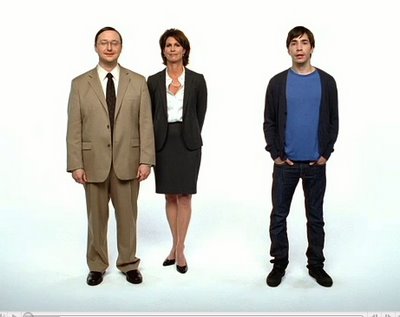 Everyone thought the “I’m a Mac” commercials were great but assumed they would get old and fade away. On the contrary, each one seems to get funnier. Even PC fans can’t help but laugh. They seem to find something that bothers PC owners and hit it, and use comedy to burn it in your mind. Well written and performed.
5. The Volkswagon Crash Ads:
Admit it. The first time you watched the commercial it scared the shit out of you. I was even caught off guard the next 3 times I watched it. I don’t know if there has ever been a more attention getting ad on TV. It is the television ad version of a “screamer” The ad was created
by Crispin who is one of the hottest ad agency out there.
6. Cabot Cheese
Perhaps the oddest commercial on TV. Comedian Luis Guzman on a set being asked why he loves Cabot cheese. It’s so crazy it’s memorable. Filmed this year but you’ll sweat it was taped 20 years ago. These cheese is delicious but either way, I’ll definitely remember Cabot Cheese from this point on
1. Buckley’s Cough Syrup:
Their ads are just plain hilarious. The premise of their ads is “It works really well, but taste absolutely awful” They use humor to get this tagline across. I first heard a radio ad where a guy asks “This stuff worked really well but is it really supposed to taste like the juice at the bottom of a trashbag?” and the announcer replies “Why yes it is”

2. Lifelock

“My name is Todd Davis and this is my social security number”. The CEO of Lifelock stands there with all the world to see with his social security number plastered all over the internet daring someone to mess with his identity. Wow, if the CEO is sharing his information then they must really be able to protect you. AND they will spend a million dollars on me making sure that nobody will mess with me. A great marketing campaign. So good that millions will spend $100 to do something they could do themselves in 2 hours a year. Well done
3. Mike Huckabee for President:
Who better to endorse a person running for President than Chuck Norris. Huckabee wants to protect our borders and who better to do it than Chuck, the toughest SOB on the planet. Nobody would even be paying attention to Huck if it wasn’t for this campaign. Brilliant campaign not brilliant man
4. Apple Computer
 Everyone thought the “I’m a Mac” commercials were great but assumed they would get old and fade away. On the contrary, each one seems to get funnier. Even PC fans can’t help but laugh. They seem to find something that bothers PC owners and hit it, and use comedy to burn it in your mind. Well written and performed.
5. The Volkswagon Crash Ads:
Admit it. The first time you watched the commercial it scared the shit out of you. I was even caught off guard the next 3 times I watched it. I don’t know if there has ever been a more attention getting ad on TV. It is the television ad version of a “screamer” The ad was created
by Crispin who is one of the hottest ad agency out there.
6. Cabot Cheese
Perhaps the oddest commercial on TV. Comedian Luis Guzman on a set being asked why he loves Cabot cheese. It’s so crazy it’s memorable. Filmed this year but you’ll sweat it was taped 20 years ago. These cheese is delicious but either way, I’ll definitely remember Cabot Cheese from this point on
Guerrilla Pepto-Bismol Campaign
This creative guerrilla campaign promotes the heartburn medicine, Pepto-Bismol.The campaign uses washing machines at laundromats to show the midsection of various people suffering from heartburn pain, with the washing machine window forming their tummy. The image is coupled with the slogan, “No matter what you throw in your stomach, Pink’s got you covered.”
I totally love the idea. When I get heartburn, my stomach does feel like its moving around. I imagine sitting in front of these washing machine and seeing this campaign in action would surely drive me to buy Pepto-Bismol, even if I was not suffering from heartburn at the time.
Very well done by Publicis ad agency, New York, USA with creative direction by Rob Feakins and Bertrand Garbassi, photography by Li-han Lin and art direction by Brian Choi.
References: adsoftheworld


I totally love the idea. When I get heartburn, my stomach does feel like its moving around. I imagine sitting in front of these washing machine and seeing this campaign in action would surely drive me to buy Pepto-Bismol, even if I was not suffering from heartburn at the time.
Very well done by Publicis ad agency, New York, USA with creative direction by Rob Feakins and Bertrand Garbassi, photography by Li-han Lin and art direction by Brian Choi.
References: adsoftheworld
Guerrilla Marketing Examples
Guerrilla Marketing Example for Pepto Bismol
miércoles, 22 de junio de 2011
martes, 21 de junio de 2011
McDonald's: 45 acciones de marketing y publicidad de una marca genuina y omnipresente
Sin duda alguna, la cadena de restaurantes de comida rápida McDonald's posee una de las marcas más populares y reconocidas a nivel mundial.
En 1940, los hermanos Dick y Mac McDonald decidieron crear la compañía, introduciendo la comida rápida 8 años después. En el 2010, McDonald's poseía presencia en 119 territorios y países alrededor del mundo y se estima que diariamente, se atienden a 58 millones de clientes en un total de 31.000 restaurantes que emplean a más de 1.5 millones de personas.
Desde sus inicios, McDonald's ha sabido cuidar y potenciar la marca de los 'arcos de oro' a través de todo tipo de estrategias y medios, convirtiéndola en una de las marcas más reconocidas y omnipresentes de nuestros días.
Tomado de Puro Marketing
En 1940, los hermanos Dick y Mac McDonald decidieron crear la compañía, introduciendo la comida rápida 8 años después. En el 2010, McDonald's poseía presencia en 119 territorios y países alrededor del mundo y se estima que diariamente, se atienden a 58 millones de clientes en un total de 31.000 restaurantes que emplean a más de 1.5 millones de personas.
Desde sus inicios, McDonald's ha sabido cuidar y potenciar la marca de los 'arcos de oro' a través de todo tipo de estrategias y medios, convirtiéndola en una de las marcas más reconocidas y omnipresentes de nuestros días.
Tomado de Puro Marketing
30 ingeniosos anuncios publicitarios para gente inteligente que despertarán tus neuronas
Sin duda, la creatividad ha sido parte imprescindible de cada propuesta publicitaria y del propio diseño publicitario utilizado durante décadas y que de forma inteligente, busca transmitir estímulos y emociones divertidas y suspicaces que pueden llegar a convertirse en el mejor detonante del impacto publicitario y del recuerdo de la marca.
Como prueba de ello, en esta ocasión seleccionamos 30 ingeniosos anuncios publicitarios para gente inteligente que despertarán tus neuronas y que seguro no te dejarán indiferente.
http://www.puromarketing.com/9/10241/ingeniosos-anuncios-publicitarios-para-gente-inteligente-despertaran-neuronas.html
jueves, 16 de junio de 2011
La sed de novedades es la principal motivación de los fans de marcas en las redes sociales
 El acto de hacer clic en el botón “me gusta” de una marca en Facebook no está exento de motivación. Según un estudio llevado a cabo en Alemania por la consultora Fittkau & Maaß, la mayoría de los usuarios de redes sociales, el 59%, se hace fan de una marca en estos canales para estar al tanto de las novedades de la empresa.
El 44% de los usuarios hace clic en el botón “me gusta” para mostrar públicamente su afinidad con una determinada marca y compartir con sus amigos su simpatía por la misma.
Los descuentos y las ofertas especiales seducen, por otra parte, al 38% de los internautas consultados por Fittkau & Maaß.
El 46% de los consultados dice haberse hecho ya fan o seguidor de alguna marca, producto o empresa en las redes sociales. La mitad de los que ya se han hecho fans de alguna marca en la Web Social son seguidores de una media de 5 marcas. Una minoría, el 15%, sigue a más de 20 marcas en los social media, informa W&V.
En cuanto a las características de los fans de marcas en la Web 2.0, la mayoría son internautas muy activos y hacen compras con bastante frecuencia en la red
Tomado de http://www.marketingdirecto.com/actualidad/social-media-marketing/la-sed-de-novedades-es-la-principal-motivacion-de-los-fans-de-marcas-en-las-redes-sociales/?utm_source=wordtwit&utm_medium=social&utm_campaign=wordtwit
Suscribirse a:
Entradas (Atom)